Dusting Attack: What Tiny Bitcoin Deposits Can Mean
Bitcoin Ink Editorial Team•November 16, 2026•7 min read
Share:
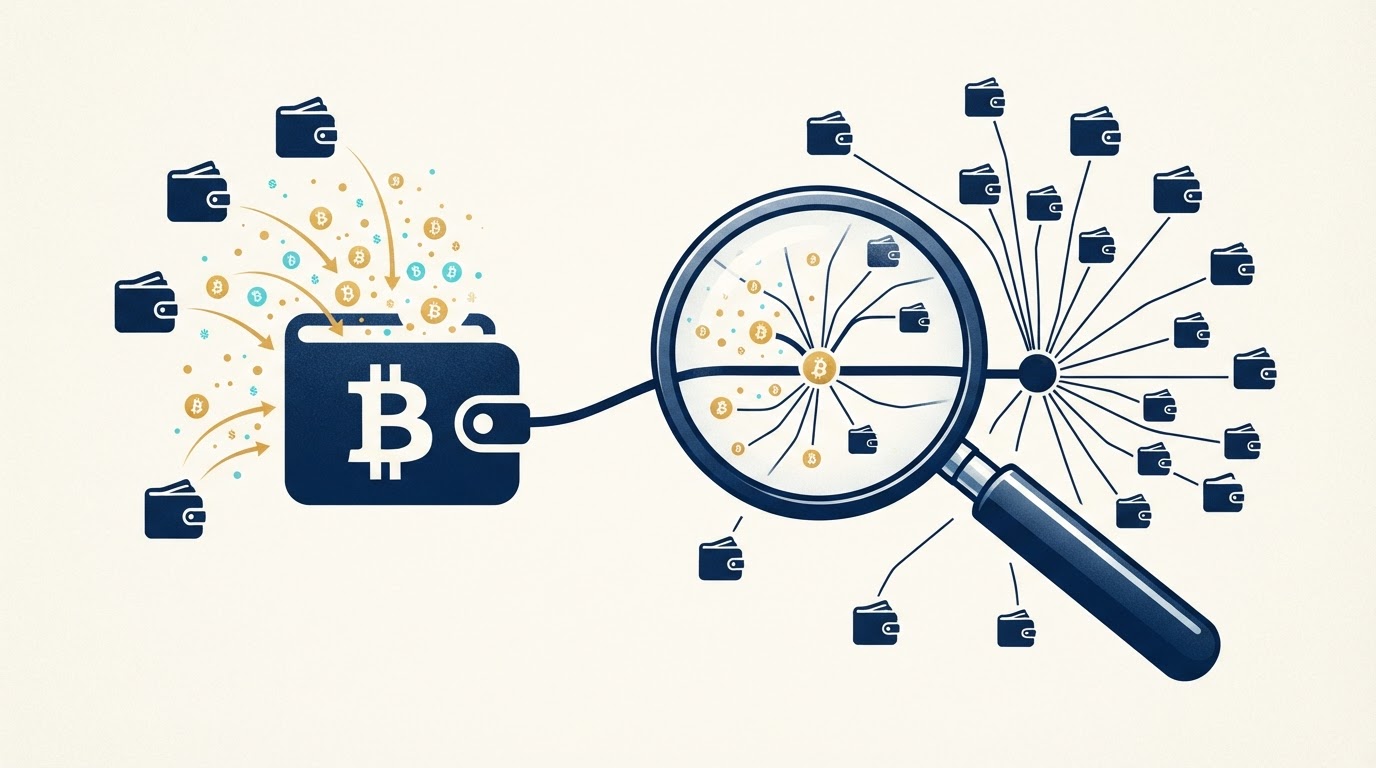
Dusting attack is a privacy tactic that can involve sending tiny Bitcoin outputs and observing how recipients later spend them. If you notice a tiny, unsolicited deposit in your wallet, it may be an attempt to link your addresses together through chain analysis. Understanding what a dusting attack can and cannot do helps you respond without panic.
A dusting attack sends tiny outputs to observe how they are later spent.
Quick Answer
A dusting attack sends very small amounts of Bitcoin ("dust") to many addresses. The sender then watches the blockchain to see which addresses spend that dust together in the same transaction. When multiple outputs are spent in one transaction, an observer can infer they belong to the same wallet. This is a privacy attack, not a theft—receiving dust does not give anyone your private keys or the ability to spend your funds. The risk arises if you later combine the dust with your other outputs.
💡 Key Takeaways
A dusting attack sends tiny Bitcoin outputs to many addresses to observe how they are later spent.
Receiving dust does not steal your keys or drain your wallet—the risk is privacy, not theft.
The privacy risk arises if you later combine the dust with other UTXOs in a single transaction.
Coin control can help you avoid spending dust outputs alongside your main holdings.
This is a Bitcoin privacy mechanic, not a cross-chain token approval exploit.
Key Takeaways
Privacy, not theft: receiving dust does not steal your keys or drain your wallet.
Linkage is the goal: the attacker learns which addresses belong to the same wallet by watching spending patterns.
Combining is the risk: the privacy leak happens when you spend dust alongside other UTXOs.
Coin control helps: you can avoid spending dust outputs with your main holdings.
Bitcoin-specific: this is a Bitcoin privacy mechanic, not a cross-chain token approval exploit.
Table of Contents
What Is a Dusting Attack?
A dusting attack sends tiny amounts of Bitcoin to a large number of addresses. The amounts are small—sometimes just a few satoshis—hence the term "dust." The sender's goal is not to send a meaningful payment. The goal is to mark those addresses and then watch the blockchain to see how the recipients spend the dust later.
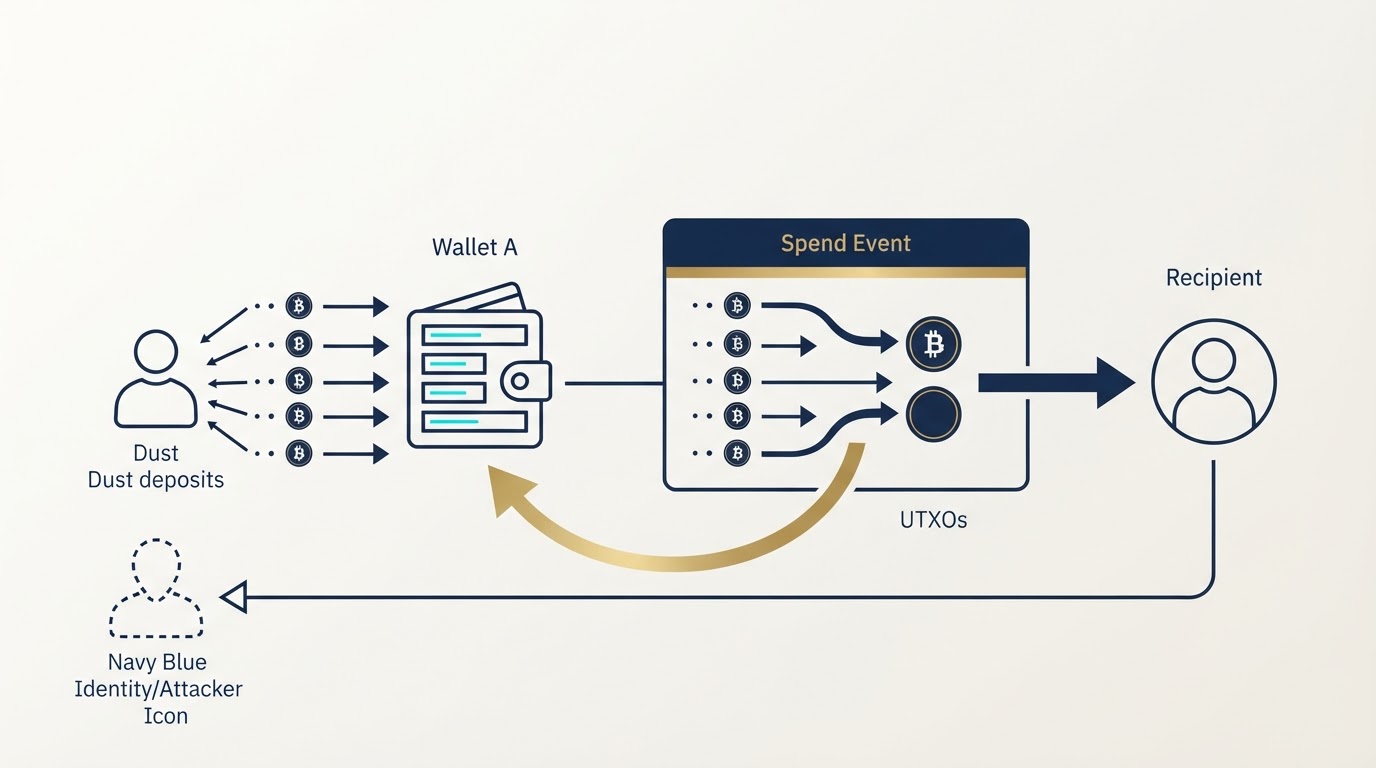
When a wallet spends multiple UTXOs in a single transaction, an observer can infer that those outputs belong to the same owner. This is called a "common-input-ownership heuristic." By sending dust to many addresses and watching which ones get spent together, an attacker can cluster addresses and build a picture of which wallets control which funds. See Bitcoin.org's privacy guide for more on these heuristics.
What It Cannot Do
It is important to be clear about what a dusting attack cannot do:
It cannot steal your private keys. Receiving Bitcoin to an address you control does not expose the keys needed to spend it.
It cannot drain your wallet. The dust is a deposit, not a withdrawal. No one can move your funds without your private keys.
It cannot install malware. A Bitcoin transaction does not carry software. The risk is privacy, not security in the sense of key theft.
If you see an unexpected tiny deposit, there is no need to panic. Your funds are not at risk of theft. The concern is that your address may be linked to others through future spending.
The privacy risk arises when dust is combined with other outputs in a single spend.
How the Linkage Works
Bitcoin transactions can spend multiple inputs and create multiple outputs. When a wallet selects several UTXOs to fund a payment, those inputs appear together in one transaction. An observer seeing that transaction can reasonably infer that all those inputs belong to the same wallet—because someone authorized spending all of them at once.
A dusting attack exploits this. The attacker sends dust to many addresses. Later, when a victim's wallet happens to spend the dust alongside its other UTXOs, the attacker sees the connection: the dust output and the other outputs were spent together, so they likely belong to the same wallet. Over time, this can cluster many addresses under one identity. To understand how UTXO selection works, see our articles on UTXO management and coin control.
How to Respond
If you receive dust, you have a few options:
Do nothing. If you never spend the dust, it cannot be linked to your other outputs. Leaving it unspent avoids the linkage.
Use coin control. If your wallet supports it, you can select specific UTXOs for a transaction and avoid spending the dust alongside your main holdings. See our coin control guide.
Be aware of automatic selection. Some wallets select inputs automatically. If yours does, it may spend dust without you realizing it. Check whether your wallet lets you freeze or label specific outputs.
There is no single correct response. The right approach depends on your privacy needs and your wallet's features.
Not a Token Approval Exploit
A common source of confusion: dusting attacks are sometimes discussed alongside "token approval" exploits on other blockchains. These are different things. On some smart-contract platforms, approving a token contract can allow a third party to move tokens on your behalf. Bitcoin does not have the same token-approval mechanism. Receiving dust on Bitcoin does not grant the sender any spending authority over your other funds. The risk is privacy through address linkage, not unauthorized spending.
Protect Your Bitcoin Privacy
Understanding UTXOs and coin control helps you manage what your transactions reveal.
No. Receiving dust does not give anyone your private keys or the ability to spend your funds. The risk is privacy—linking your addresses through spending patterns—not theft.
Should I spend the dust?
If privacy is a concern, avoid spending the dust alongside your other outputs. Leaving it unspent prevents the linkage. If you must spend it, use coin control to select it separately from your main holdings.
Is a dusting attack the same as a token approval exploit?
No. Token approval exploits involve smart-contract permissions on other blockchains. Bitcoin does not have the same mechanism. Receiving dust on Bitcoin does not grant the sender any spending authority over your other funds.
How do attackers link addresses?
By watching which addresses spend the dust together in the same transaction. When multiple outputs are spent in one transaction, an observer can infer they belong to the same wallet. This is called the common-input-ownership heuristic.
What is coin control?
Coin control is a wallet feature that lets you choose which specific UTXOs a transaction spends. It helps you avoid combining dust with your main holdings, reducing the privacy risk. Not every wallet offers it.
Key takeaway: A dusting attack sends tiny Bitcoin outputs to observe how they are later spent, aiming to link addresses through the common-input-ownership heuristic. It cannot steal your keys or drain your wallet—the risk is privacy. Avoid combining dust with your main holdings, and use coin control if your wallet supports it.
No. Receiving dust does not give anyone your private keys or the ability to spend your funds. The risk is privacy—linking your addresses through spending patterns—not theft.
Should I spend the dust?
If privacy is a concern, avoid spending the dust alongside your other outputs. Leaving it unspent prevents the linkage. If you must spend it, use coin control to select it separately from your main holdings.
Is a dusting attack the same as a token approval exploit?
No. Token approval exploits involve smart-contract permissions on other blockchains. Bitcoin does not have the same mechanism. Receiving dust on Bitcoin does not grant the sender any spending authority over your other funds.
How do attackers link addresses?
By watching which addresses spend the dust together in the same transaction. When multiple outputs are spent in one transaction, an observer can infer they belong to the same wallet. This is called the common-input-ownership heuristic.
What is coin control?
Coin control is a wallet feature that lets you choose which specific UTXOs a transaction spends. It helps you avoid combining dust with your main holdings, reducing the privacy risk. Not every wallet offers it.
Enjoyed this story?
Share it with your network and help others discover the history and utility of Bitcoin.
Disclaimer: This content is provided for general educational and informational purposes and is not financial, investment, legal, or tax advice. Bitcoin involves risk, including the possible loss of value. Consider your circumstances and consult qualified professionals when appropriate.